
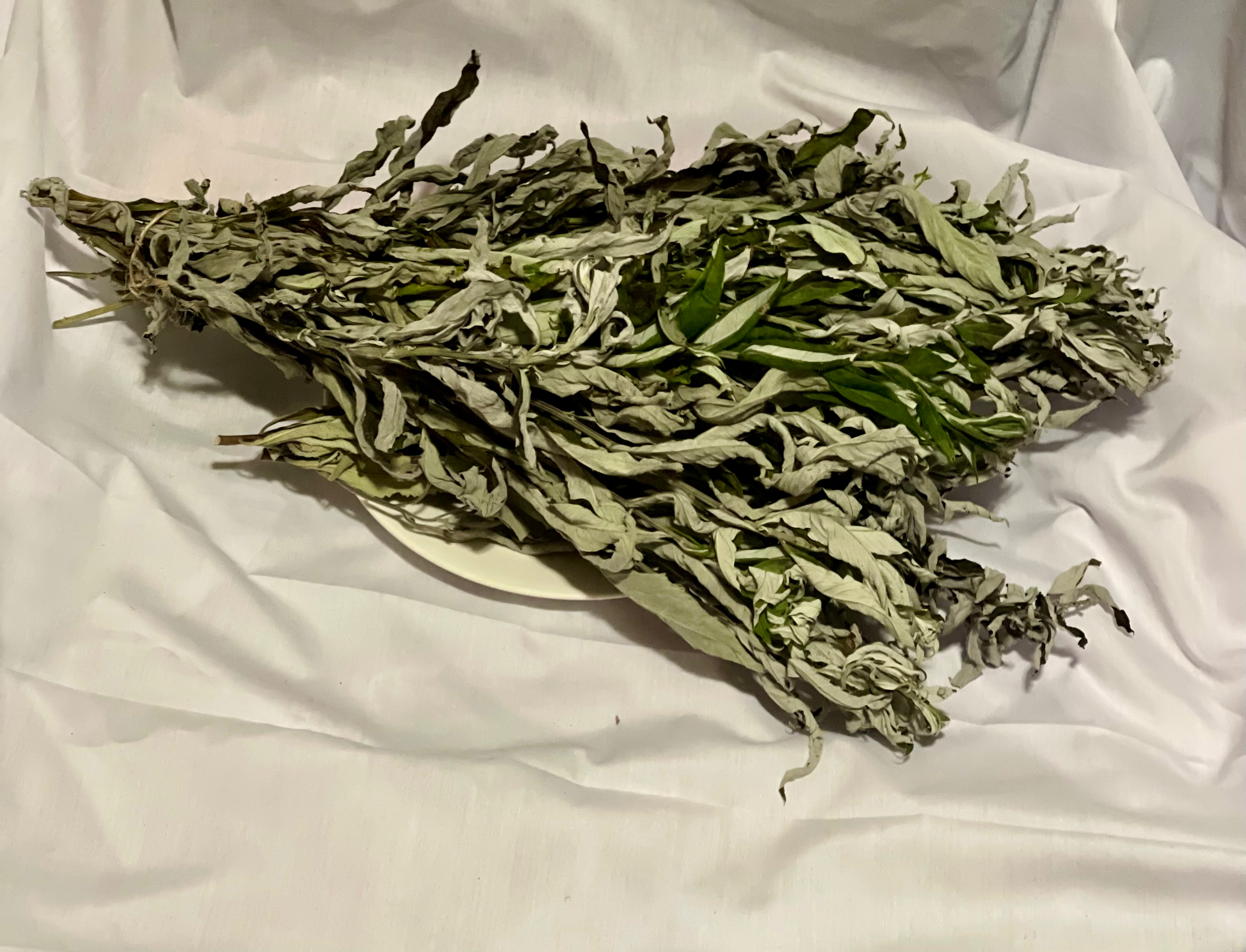

Ethically Wild Crafted Yerba Santa
History
The name yerba santa ("holy weed") was given by Spanish priests who learned of the medicinal value of the shrub from American Indians. The plant has a long tradition of use in the United States. The thick, sticky leaves, used either fresh or dried, have been boiled to make tea or taken as a treatment for cough, colds, asthma, and tuberculosis; the leaves have been powdered and used as a stimulating expectorant.(Lewis 1977) A liniment has been applied topically to reduce fever.
A poultice of fresh leaves has been used to treat bruises, and young leaves have been applied to relieve rheumatism.
Sterubin, found in Yerba Santa (E. californicum) is a potent neuroprotective and anti-inflammatory compound with possible benefits in Alzheimer disease
Sterubin Has been known to have had a positive impact on short- and long-term memory at low dosages
Yerba Santa( E. californicum) consumption resulted in significant reductions in body weight (P=0.042) and body fat (P=0.044), as well as a tendency toward reduced leptin levels (P=0.065), in women with obesity
Yerba santa has also been investigated for treating xerostomia, as a substitute for tobacco use, for reducing skin or mucosal irritation, and as a moisturizer.(Coy-Herbert 2002, Lewis 1977, Parnell 1993)
The yerba santa plant is an evergreen aromatic shrub with woody rhizomes. It is indigenous to the hills and mountains of California, Oregon, and northern Mexico